

Creative Parents: Ember Fairbairn (contemporary artist and mother of two)
"Question everything. Stay curious. Stay humble."

It’s so wonderful to feature Ember Fairbairn after being involved in her art for several years. I’m currently in Hobart on a solo (jampacked - see my insta stories) work, art and food trip, so this intro from me is a quick one, but I was keen to get her interview up today as her exhibition, Hiraeth at Sophie Gannon Gallery, closed last week. I always love to pair these Q&As with recent exhibitions or projects when I can, as so much energy and lifeforce goes into the making of them. My whole role as an art writer is to celebrate these monumental feats of human expansiveness that bring beauty and deep thinking into the current moment. I’ve been thinking a lot about science this week as I’m in Hobart for Beaker Street Festival as a guest of Tourism Tasmania. Science pushes your brain into thinking about things that don’t get thought of by many people. Art does the same, nudging into the metaphysical. I always like to see where it takes me, and it can be places that don’t exist anywhere else. Ember’s art really does this. From her gallery’s website: “Ember Fairbairn's painting practice is rooted in a process-oriented methodology that emphasises the metaphysical and ecological relationships between body and landscape.” I’ve been looking at the stars, slime mould, and rocks this week… abstract art encompasses all those elements for me.
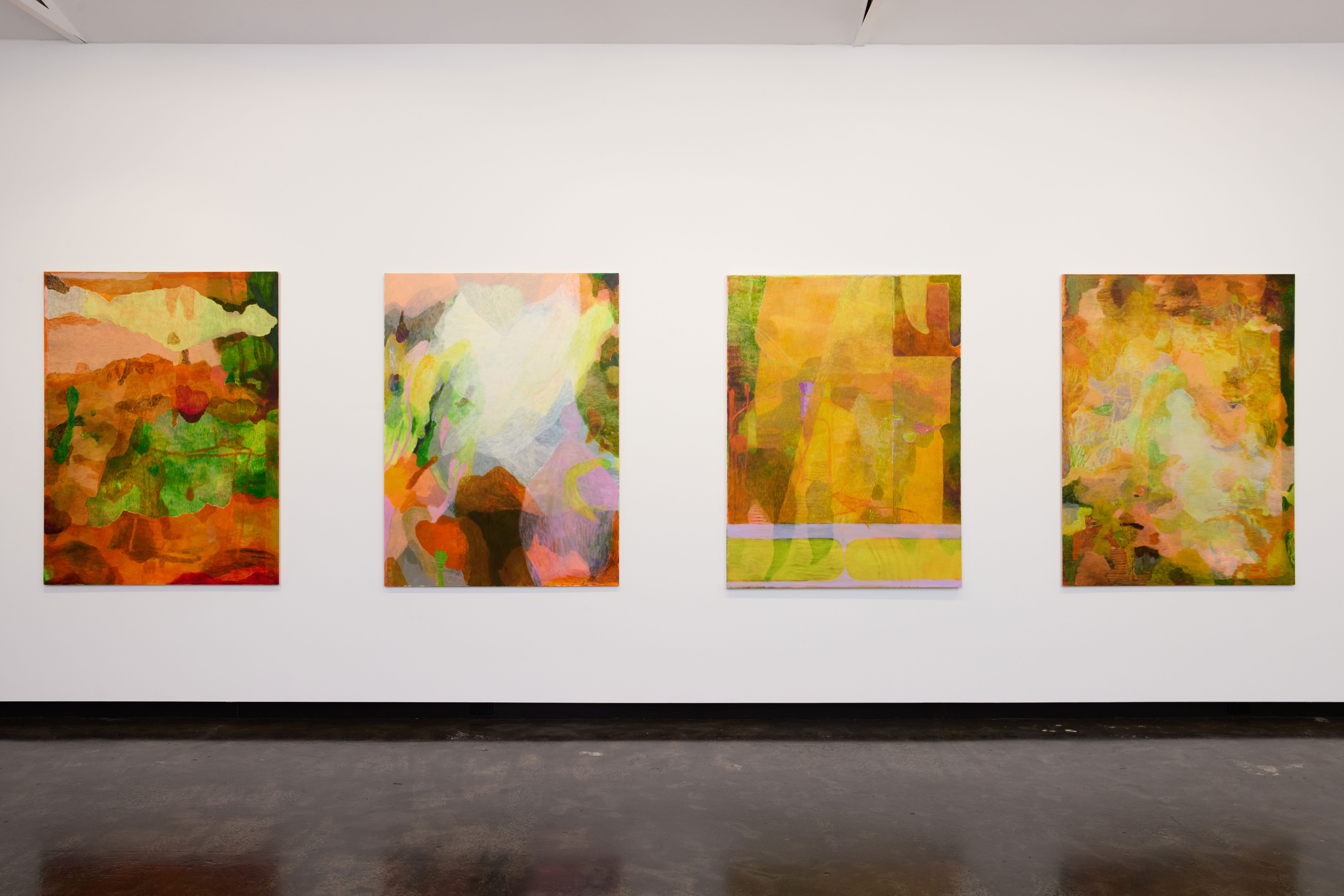
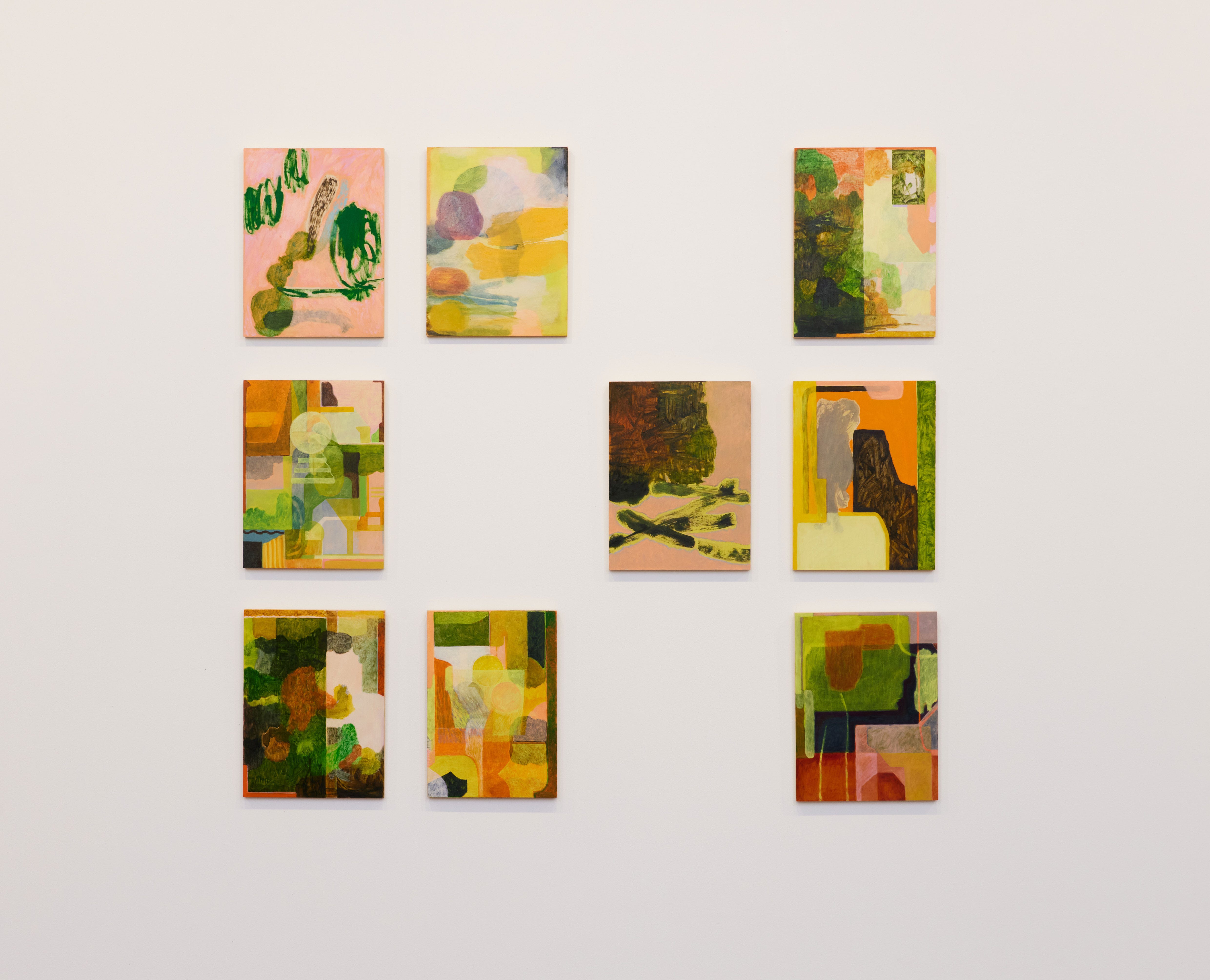
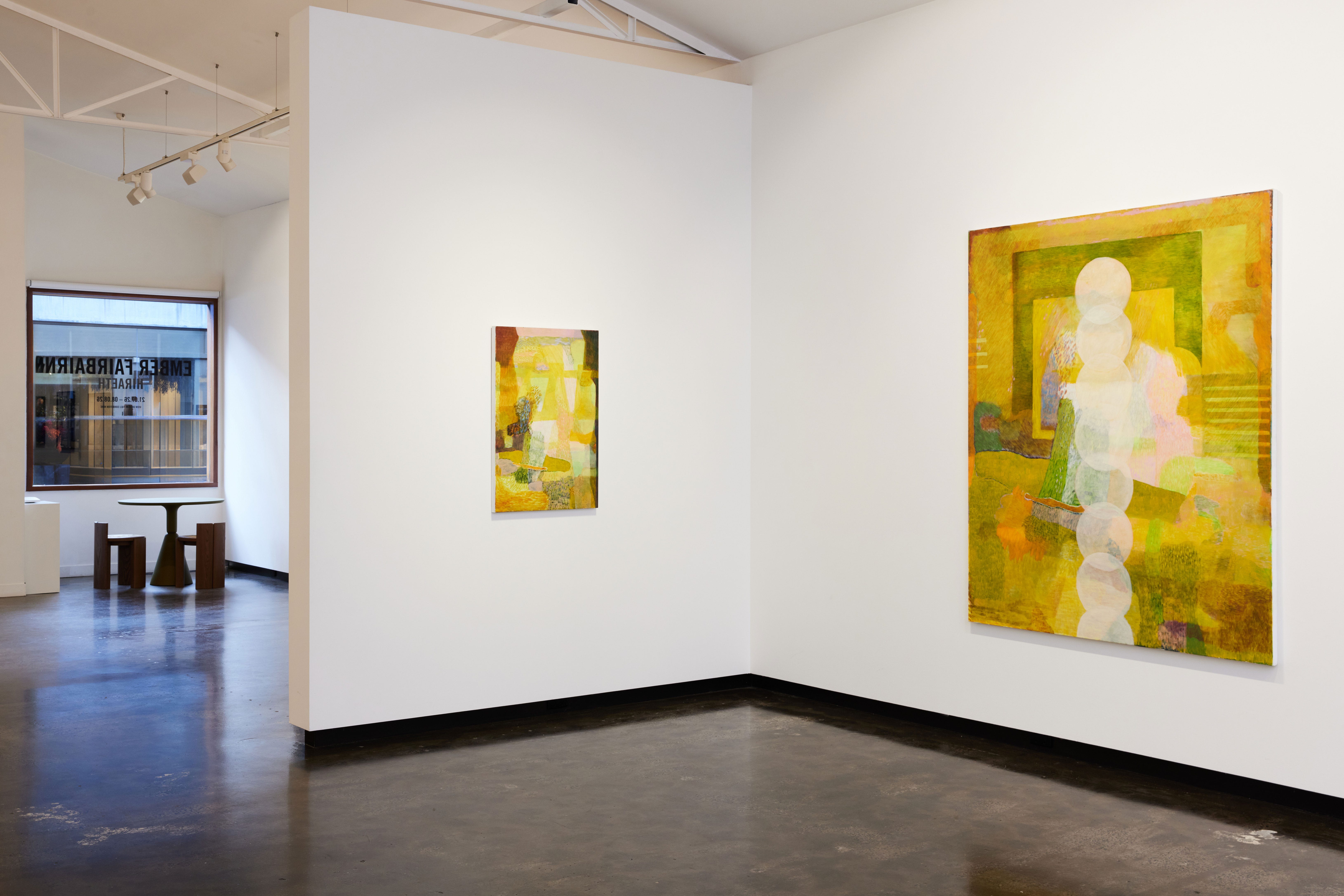
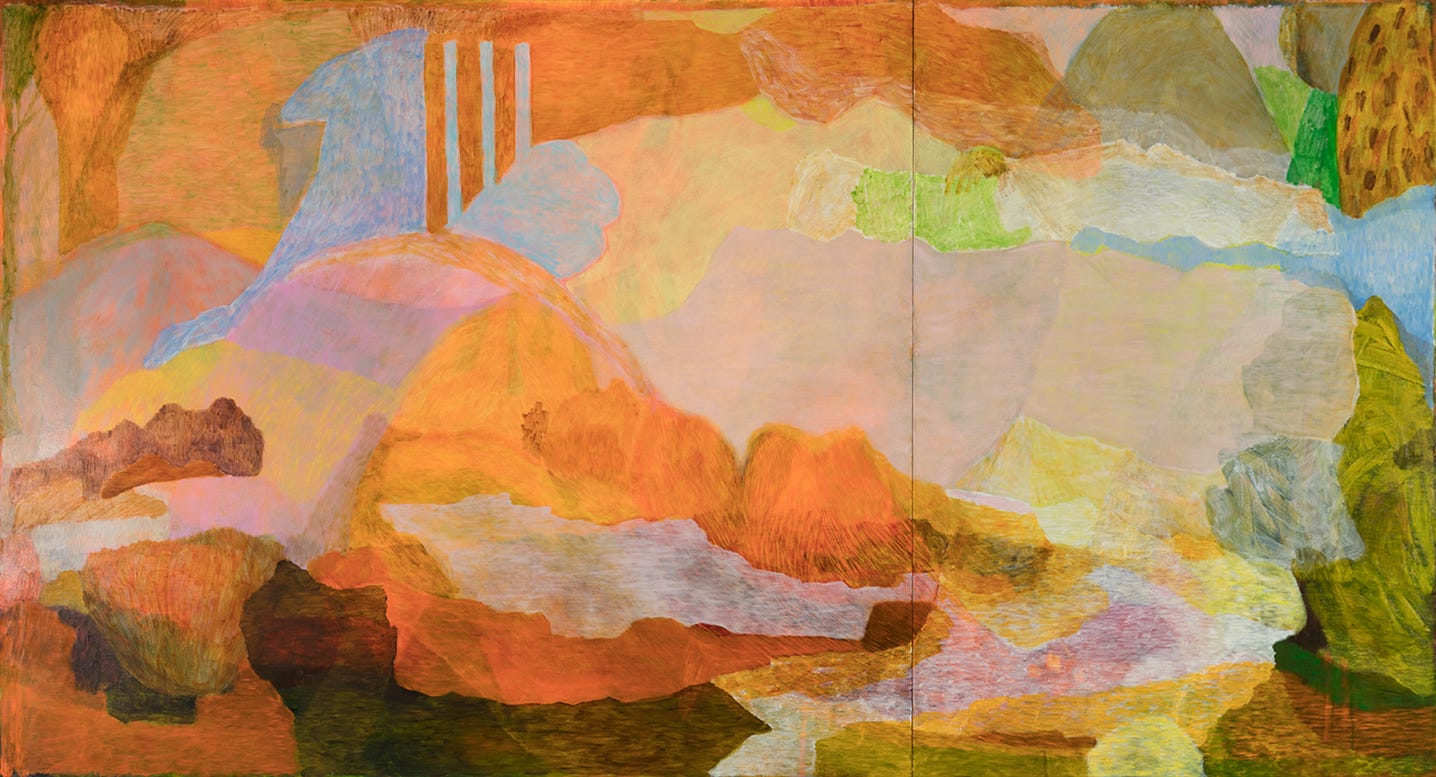
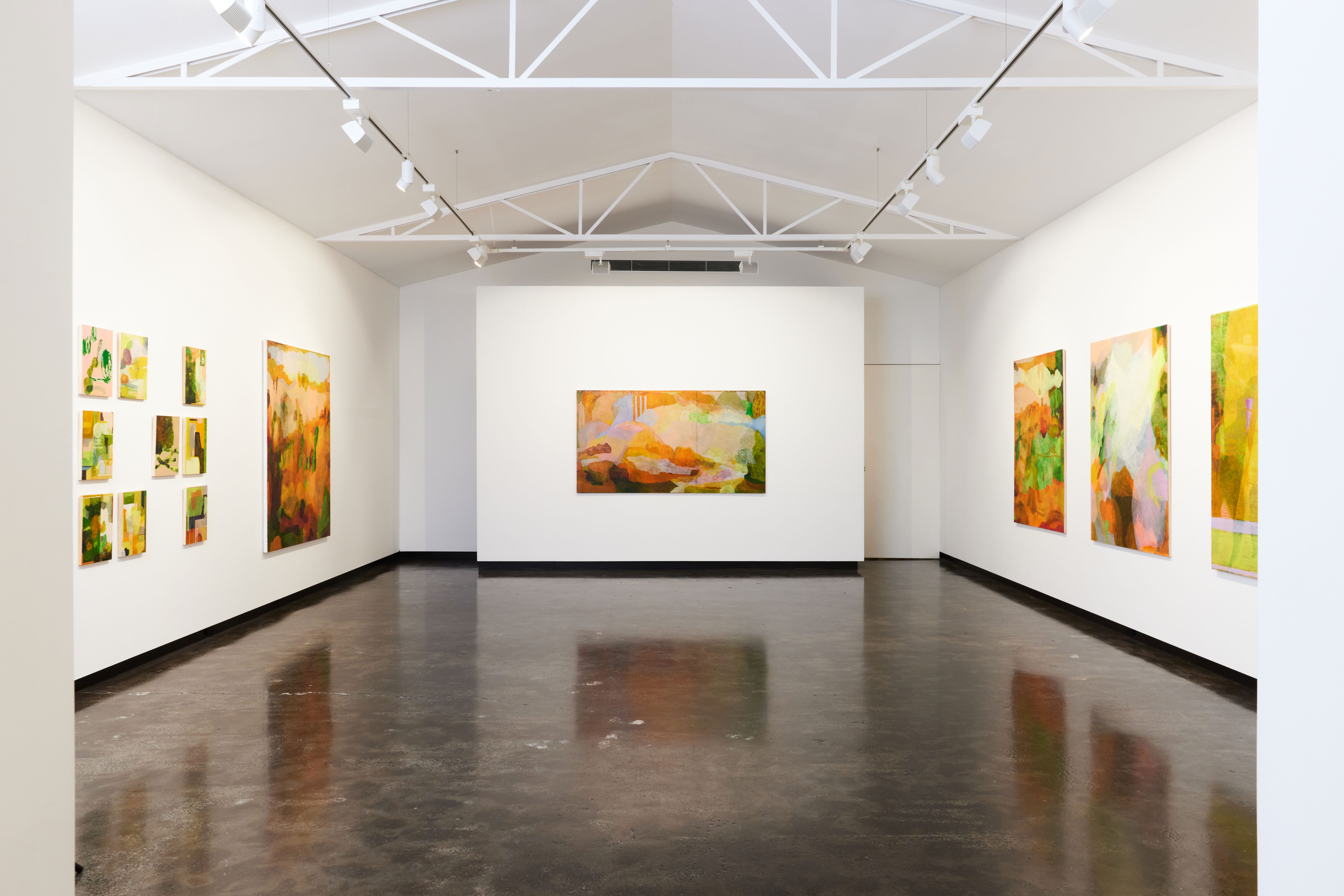
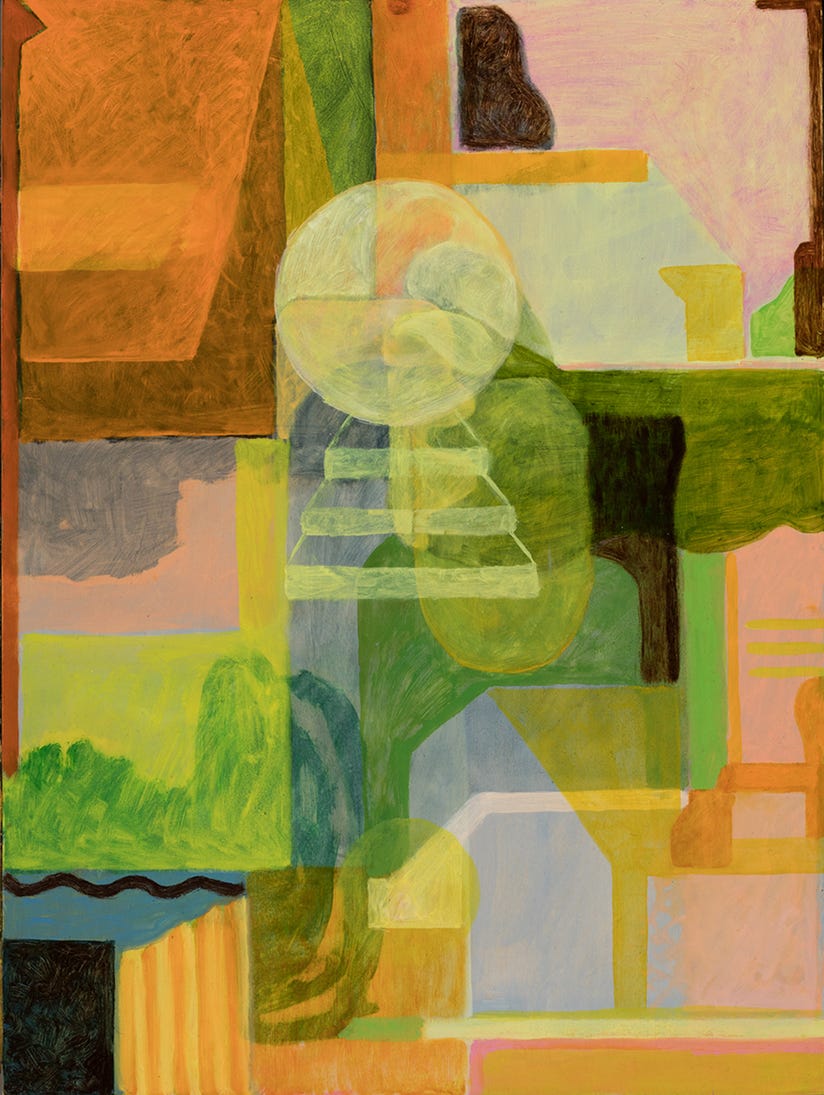
I’ve been able to include lots of her artworks from Hiraeth in this article. Natalie Mather writes in her exhibition essay:
“Hiraeth” is a Welsh term with no English equivalent, meaning to feel a keen nostalgia for a place or time that has disappeared, or perhaps never existed. More than homesickness, hiraeth contains the understanding that home is irretrievably lost to time or memory. Forged during a period of profound personal upheaval, Fairbairn’s paintings in Hiraeth provided her with a provisional sanctuary, even as they mirrored back an uneasy succession of changes in the artist’s life. Fairbairn clarifies that the work in Hiraeth was created during a time “when every structure I'd built my life around shifted,” and that her paintings “enact that disorientation rather than resolve it.”
It’s a beautiful essay, and a beautiful concept. I often think about hiraeth (without knowing the work for it until now). It’s especially pertinent in this parenting journey.
The thing about thing series… It’s about the parents. Ember mentioned she didn’t really have many photos of her now-grown children; she mentioned the word aesthetic. This series is about the creative and the creativity, rather than about the parent. I often muse on how mothers regain independence while being the source of life after having children. And so much of Ember’s interview resonates here; she writes of her art, “each layer holds the residue of what came before.”
I did say this would be a quick intro… it never is (haha). Thank you so much to Ember. I’ll treasure this interview for a long time, and I’m grateful to her for sharing.
Here is the Q&A of Ember Fairbairn, contemporary artist and mother of two:
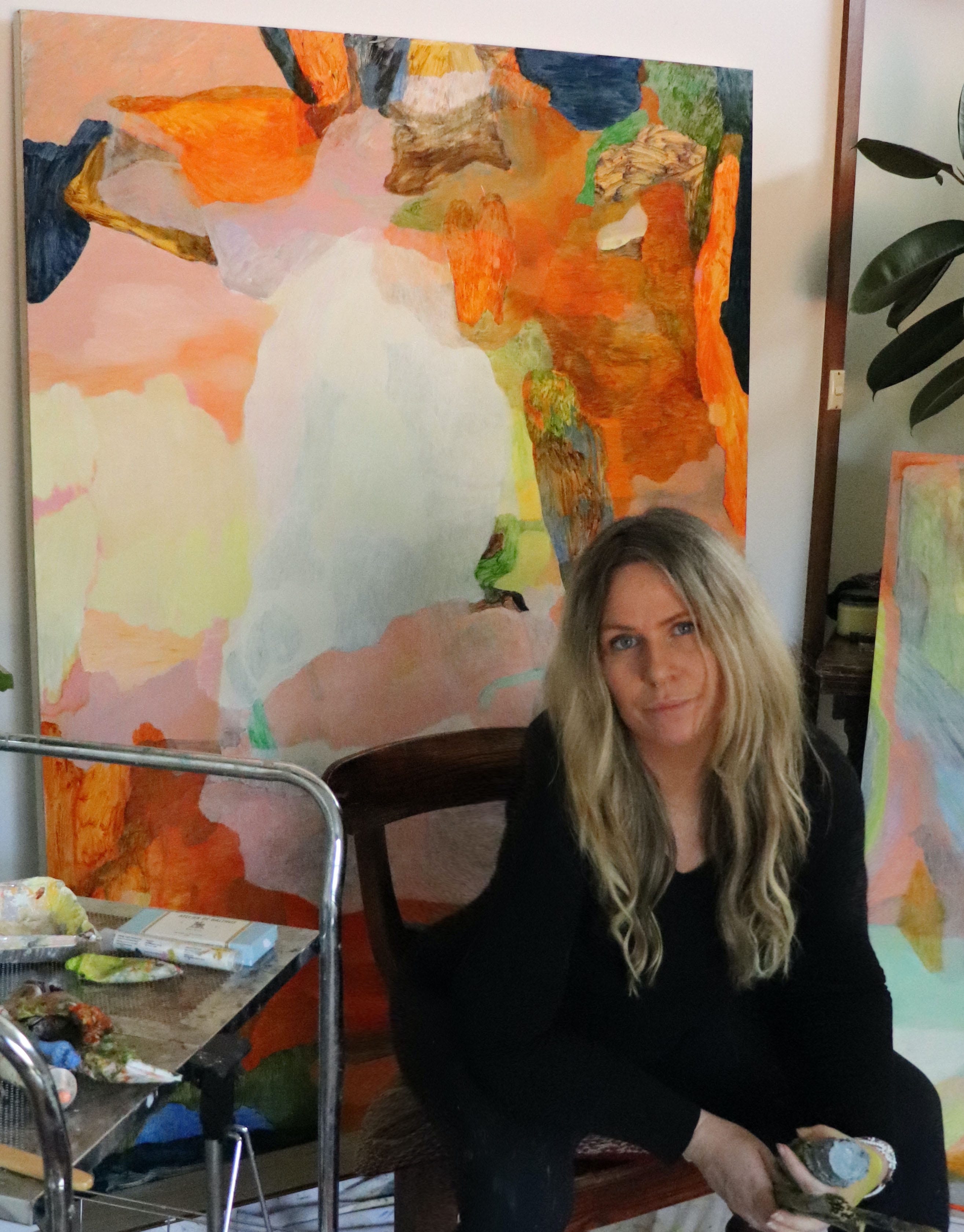
Can you tell us about your practice — what do you create, with what, and why?
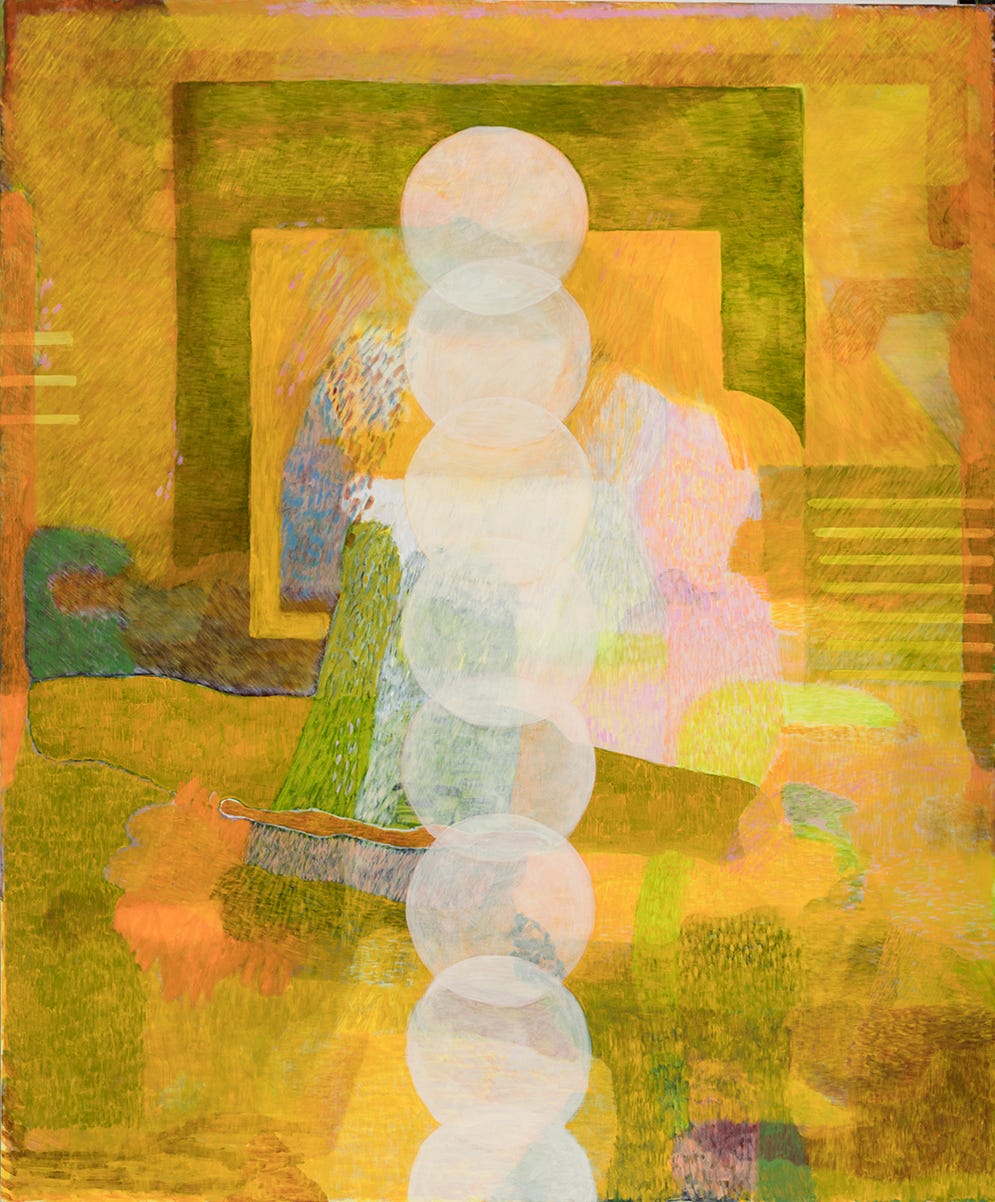
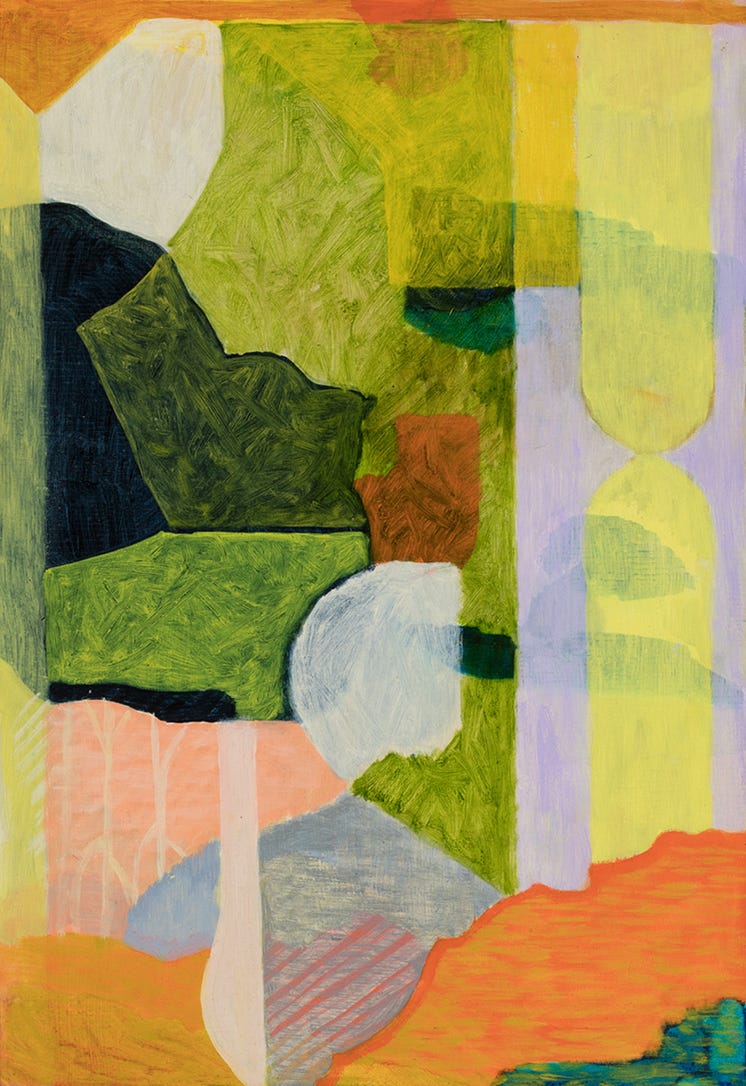
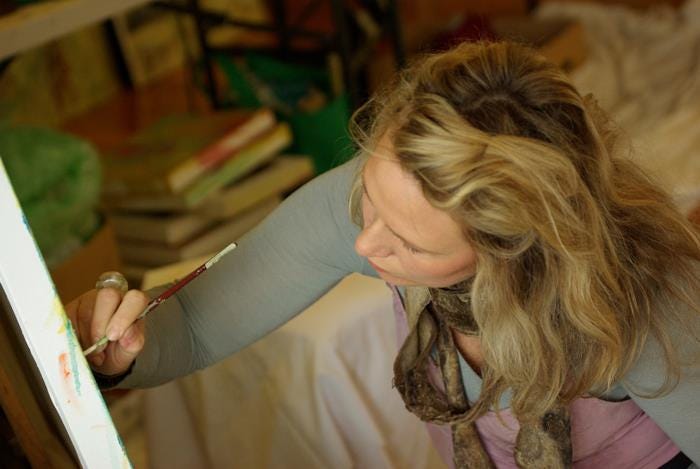
I am a painter working primarily in oil paint. My practice is process-oriented — I am led by the material, thinking and feeling through paint, brush, and surface. Each mark, each layer holds the residue of what came before. I work in many thin, translucent layers that build an almost ethereal luminosity, and the process of covering and revealing is central to how meaning emerges in the work.
For me, the materiality of paint and the experience of my life are interchangeable. Ghost forms are residues. A mark is a timestamp. An edge is a threshold. Painting gives form to what I cannot otherwise say. I look at the world through an animist lens, understanding the self as continuous with the animate natural world rather than separate from it. In this way, painting for me is also feminist and therefore the antithesis of phallocentrism. This then leads into work becoming circular in its relation to time and being.
The ambiguity in my work is not emptiness. It is teeming with the lived experience of a life felt fully. I don’t think they can come across in images that well, as they have so many layers; lots of subtleties poke through, hinting at what has gone on in the process, as I don’t want to hide that. I want the paintings themselves to have their own ‘lived experience’.
The layering in my paintings also enacts something I think of as infinite regress — each layer containing the residue of what came before, the origin always receding further as the work deepens. Just as the body holds every place it has ever lived without ever finding a final ground, the paintings hold accumulated time without resolving into a fixed meaning. They stay open. They keep becoming.
How did you get here?
The path has been anything but linear — which feels appropriate for someone whose work is about the non-linear nature of time and experience.
I grew up in a household where art was present and valued. My mother studied art at RMIT when I was a child, and I would go with her — into the studios, to exhibition openings, to galleries. I was even dragged along to art history lectures, which I enjoyed far more than any child probably should. That world felt natural to me from very early on.
I began with dance, voice, and performance — these were my primary creative forms through school alongside art making. Then in Year 11 something shifted. I became obsessed with painting in a way that eclipsed everything else. The medium got hold of me and never let go. I was an art school dropout, though. I went to QCA and was far too young (at 17).
After years of exhibiting in artist-run spaces and smaller galleries in Australia and internationally — Singapore, New York — I found myself in my early forties as a solo parent, knowing I could do so much more with my practice. So I was lucky enough to get into a Master of Contemporary Art at the Victorian College of the Arts. I had no undergraduate degree, no idea how to write an academic essay, and I was driving sometimes nearly two hours each way in traffic to attend. It was done almost out of defiance — at the world, at the circumstances, at the voice that said it wasn’t possible. I graduated with First Class Honours, was awarded the Art150 Travelling Fellowship and the Athenaeum Visual Arts Research Award at graduation, and shortly after had my first solo exhibition at Sophie Gannon Gallery in 2020. I have been exhibiting with them ever since.
I think being a solo parent and making art is brave, fierce, and defiant. It is by nature a political act in its doing.
What inspires your work? Any particular art or design periods or philosophies?
I am inspired by deep ecology — the understanding of the self as continuous with the animate natural world rather than separate from it. I look at the world through an animist lens. I am also drawn to the philosophy of mythic time — the idea that time is not linear but cyclical and recursive, that the core experiences of human life repeat across civilisations and geological ages without resolution. We move through them as if for the first time.
Painters I return to again and again include Per Kirkeby, Andreas Eriksson, Joan Mitchell, Julie Mehretu artists who hold ambiguity, who let the work be fully alive in its own terms. I also grew up looking at a lot of impressionists, and I love Bonnard; Kandinsky was also an early influence. Then current artists I love are people such as Pam Evelyn and Amy Silman, but there is a loooooong list of painters whose work I love.
The other major inspiration really was becoming a parent. Rather than letting the creative life slip, it made me want to fight for it more. I think I need to be able to fight for things that have meaning. Being able to give of myself fully as a parent meant that I needed a way to fill my own cup as well. Quiet creative time in the studio recharged me. It didn't have to be painting; it could be any kind of creative act, including making space for the kids to create things when they were little. Making a mess with them never bothered me; it was inspiring.
When did you know you wanted to become a creative? Did you have an influential figure growing up?
I think a creative sensibility is something that has been passed down through my matrilineal line. I have early childhood memories of making clothes for my Barbies with my grandmother, painting alongside her, and the tactile pleasure of making things with my hands. My mother is the most significant influence — she made art and studied it when I was young, and being brought into that world shaped everything. I wanted to be part of it from as early as I can remember. I was always bossing around the neighbourhood kids, directing them in plays or in costume-making. One time I wanted to build something, so I rallied the neighbourhood kids to seek out building materials from homes in the streets around us, dragged it all to the local park and built it. I actually got into a lot of trouble doing so from my dad at the time.
Dance, voice, and performance were my forms first — I pursued these through all my schooling years alongside art making. Then in Year 11, I started painting more than anything else and became completely obsessed with the medium. That obsession has never left.
It’s always been there.
What have been some of the highlights of your career? Do you have a favourite project you’ve worked on, or are working on?
Graduating with First Class Honours as a solo parent in my early forties felt like an enormous personal and professional milestone. Being represented by Sophie Gannon Gallery has been transformative — it is a gallery of genuine integrity and care, and being part of that community has shaped my practice significantly.
Being included in Australian Abstract by Amber Creswell Bell, published by Thames & Hudson and distributed internationally, was a significant recognition. And my most recent exhibition, Hiraeth, which opened at Sophie Gannon Gallery in July 2026, has been the most personally exposed and conceptually resolved work I have made — exploring what the body holds when home is no longer fixed or secure, drawing on the Welsh concept of hiraeth, the untranslatable longing for a place that is gone or perhaps never existed. It was made during one of the most difficult years of my life, and making it was necessary in a way that previous work hadn’t been. Housing insecurity has long been an important subject for me, especially as a solo parent. It creates so much anxiety and unnecessary stress. I lost my home in a divorce, so I have been renting ever since. On a larger scale, as a woman whose ancestral lands are scattered through Wales, Scotland, and Denmark, I have no way home to those ancestral lands. The land I was born on, though it runs strong in my veins and I love it, is unceded land, and it’s a conversation that needs to be happening ongoing in Australia.
I am currently working on a commissioned printmaking project and have a forthcoming residency — both feel like genuinely exciting new chapters in the practice.
I am also putting together some workshops on artmaking both online and at my studio in Healesville.
Who is in your family, and what are their ages?
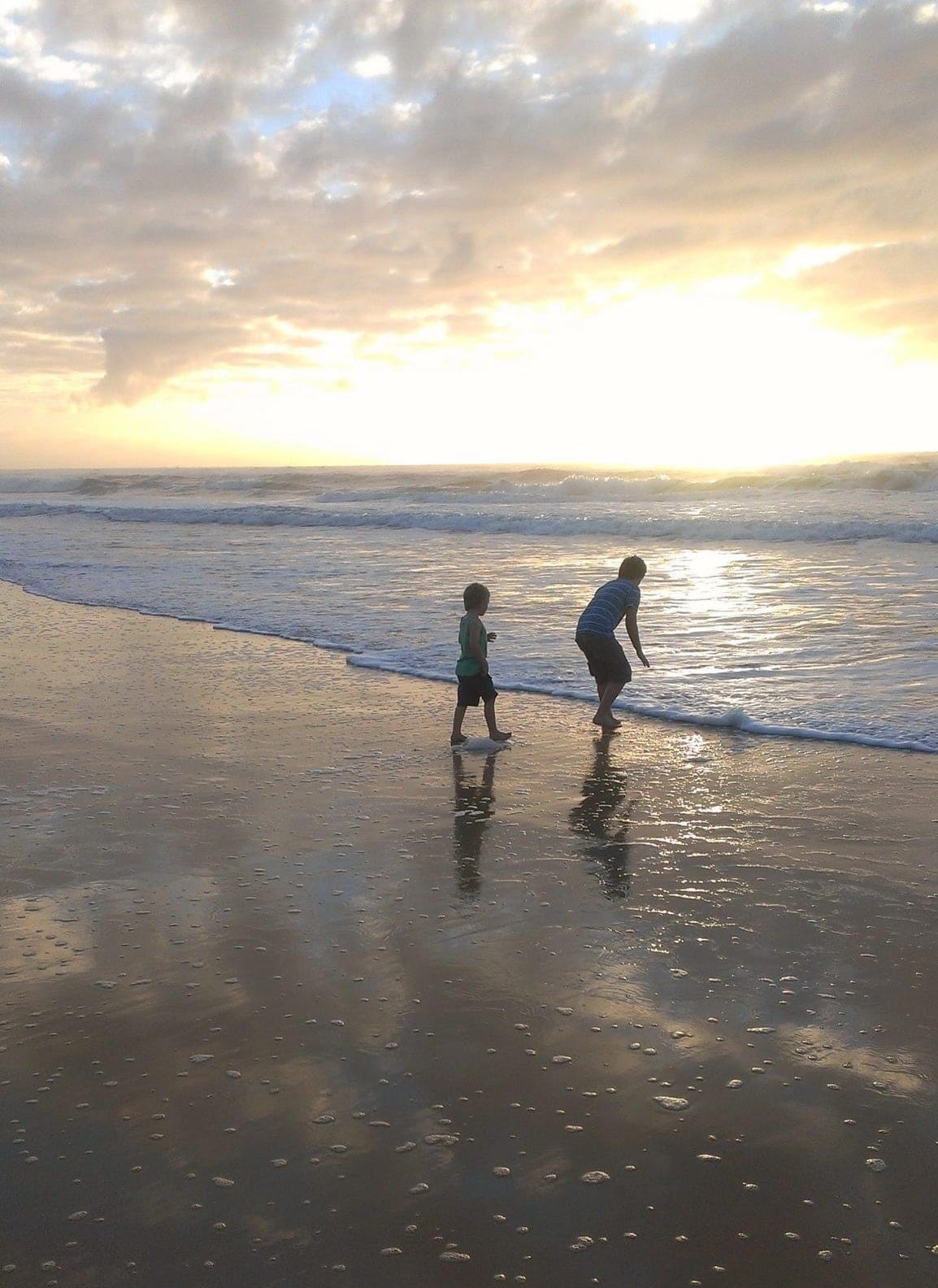
I have two sons — one is 23, and one just turned 18 and recently moved out of home. They are everything. For much of their lives I was a solo parent, which shaped everything about how I worked and what I was able to make. Now that they are both adults and living independently, I find myself in a new chapter — one with more time for practice but also a different kind of quiet. I’m in two worlds currently, helping with the transition of my youngest while at the same time moving regionally to care for my mother who recently became unwell.
Where are you based, and why did you choose this area?
I have recently moved to the Yarra Valley to support my mother through a significant illness, while maintaining connections to Melbourne for ongoing support of my youngest. It was not a planned move but a necessary one — and in some ways it mirrors the themes of my recent work. Hiraeth was made while I was without a stable home of my own, and I am still finding my ground.
What I do have is a beautiful studio, which is genuinely my happy place. It has everything the practice needs functionally, but also an altar with objects gathered from my travels, a comfortable couch where I can sit with a cup of tea and look at the work. That space has been my anchor through everything.
In terms of aesthetics — I am drawn to rustic industrial meets old-farmhouse bohemian. I have a lot of old furniture from Southeast Asia, textiles collected from Peru, Chile, and Afghanistan, a collection of old saris, and ceramics I have gathered over years. It is a mishmash of things rather than a design ideology — objects with history and feeling rather than a curated look. I am a devoted collector of ceramics in particular, both functional pieces and works of art, though my budget hasn’t allowed for any significant purchases (yet).
Has becoming a parent changed your practice?
Becoming a parent actually made me more focused as an artist, which surprises people. Perhaps being in that liminal space between identities does something clarifying. Who you think you are fades. The extraneous dissolves. I became more myself.
When my children were small, and I was parenting alone, painting became something I could do that I deeply loved while being present at home. As they got older, the way I was making work stopped satisfying me — I knew I was capable of so much more — and that knowing eventually led me to the Masters. The children were the ground that held me while the practice found its shape.
Now that my youngest has moved out, I am in a different kind of transition again. There is more time, more space, more silence. The practice is expanding into that space in ways I am still discovering.
What does your day-to-day look like, and how has this changed through the years?
For many years the day was structured around school runs, meals, the rhythms of children’s lives — and the practice had to fit within and around all of that. There was a kind of creative compression that came from limited time, which wasn’t always comfortable but produced its own kind of focus. As I already mentioned, I kind of had to fight for the practice, which saved my sanity at times.
Now the day is more fluid and more fully given to the practice. I move between the studio and caring for my mother, between Melbourne and the Yarra Valley, between making, thinking, and looking. The studio is where I return to most reliably — it is the consistent place in a year that has been full of inconsistency.
Do you have any advice for creative parents?
Keep going. Even when it feels impossible, even when the time is fractured, and the conditions are far from ideal — keep the thread alive. The practice doesn’t need to be grand or fully formed every day. It just needs to continue. It can take any form, not necessarily the type of artmaking you think it ‘should’ be.
And be honest with yourself about what the practice needs versus what circumstances allow. That gap is real, and it is hard, and pretending otherwise doesn’t serve anyone. But creative work has a way of finding its form within constraints — sometimes the constraints are what make it necessary.
What are your thoughts on the industry’s approach to parents?
I have felt genuinely supported over the last six years — through my studies at VCA and in my professional practice. But I think the broader structural question is really about governmental support of the arts in general, and that is where there is a significant lack.
It often falls to the private sector and corporations to do philanthropic work and collecting — and that support is invaluable — but it shouldn’t be the primary model. The arts are an essential part of cultural capital. They keep communities vibrant and healthy, generate new ideas, ask difficult questions, and take the kinds of risks that matter for a society’s wellbeing. That deserves structural support, not just goodwill.
One small but telling example: if an artist wins a prize in Australia, they pay tax on it. If an athlete wins a sporting prize, they don’t. That asymmetry says something about how the government values creative practice relative to other pursuits.
Do you have a mantra or quote that keeps you going?
It’s less a mantra and more a discipline: keep going and don’t stop. Be critical of your own practice. Question everything. Stay curious. Stay humble.
That’s it really. Those four things together have carried me through more difficult moments than I can count.